The Paramis - Generosity (Dana)
Tuere Sala | FEB 2, 2024
The Paramis - Generosity (Dana)
Tuere Sala | FEB 2, 2024
Greetings,
This month we will began our journey into the Paramis with generosity. Last year we talked about generosity through the lens of dana as one of the pillars of insight. We explored how this pillar brought us to or kept us in the Dhamma. This month we're going to look at generosity itself. We want to look at it from an expanded view, which means looking at all of the implications of what generosity can be. I looked up the word generous and found two meanings. The first meaning is giving or sharing in abundance and without hesitation. There were words like 'big-hearted', 'bountiful', 'charitable', 'free', 'liberal', and 'open-handed.' The second meaning is being more than enough without being excessive. Here there were words like 'abundant', 'ample', 'plenty', 'enough', 'sufficient', and 'plump.' These words are important in that we can expand our view of what generosity is if we expand the words we use to describe it. This month we want to experience generosity directly. Not from our opinion about what we think it is, but rather our understanding that comes from the felt sense of an experience we believe is the presence or absence of generosity.
In Pali, this idea of generosity is more than dana. Dana is just one word used to describe generosity. There are two other Pali words that describe generosity also. They are caga and upadhi. Dana relates to the giving of materiality. Caga relates to the internal experience of giving. Upadhi relates to the mind state connected to ownership. These three aspects are all present in a simple act of giving. They represent the nature of generosity itself. The more I have practiced with these three aspects of generosity, the more I think generosity is the practice of "giving away" or "letting go."
Dana is the first step of generosity. It is the "giving away" of material things. It is not easy to give away things once we have acquired them. As soon as we acquire something it is now mine. This acquisition and accumulation creates the need for protection, safety, and wealth. This has the effect of putting us in a place of strength. We have rights over our stuff and there is a sense of belonging. At the same time, these things are at the heart of suffering. We become attached to everything we acquire. This creates dukkha in trying to keep them and dukkha towards anyone who causes us to lose our things. When we practice giving away our acquired things, we diminish this suffering. We learn to recognize attachment when it arises and through mindfulness, we learn how to shield ourselves from the dukkha of acquisition. This is what happens when we give money, time, resources, and energy to the Dhamma. We are giving something that can be identified. We give dana as financial support. We volunteer at sanghas or events and give our time and energy. Over time, we learn to discern what to give, how much to give, when to give, etc.
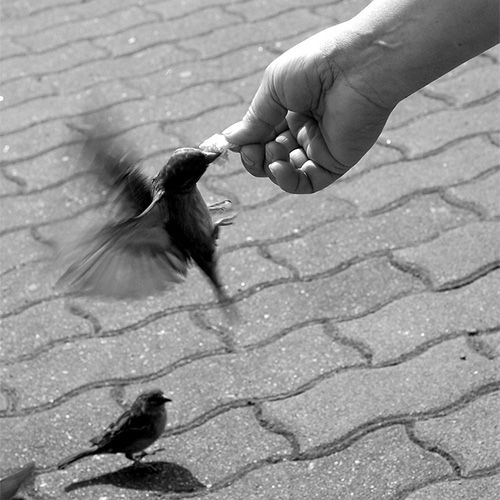
Caga is the second step of generosity. I think of this as the practice of "giving away" our rights of possession. Caga is practicing at a higher level of giving. We are moving into a more ultimate understanding of generosity. A sense that all property and material things are temporal. They are not as solid as they appear. They actually come in and out of existence. For instance, I have a rule at my house where I give away anything I haven't touched in a year. It's weird because when I use something, it seems substantial. If I go a year and I haven't put my hands on it, how substantial can it be? I began to realize this and it has helped me live a less cluttered life. Through the exploration of caga, you can see the suffering that arises around ownership of property. We learn to “let go” of the ownership of things. Our possessions become less and less personal. In this level of practicing, we are developing a dispassion in relation to “things.” We are learning to protect our hearts from the pain of attachment and acquisition. This level is more subtle than the physical giving of material things. This aspect of generosity is working at the heart level. We feel it emotionally, both the pain of losing our possessions and the liberation of learning to let go of ownership.
Upadhi is the third step of generosity. I think of this practice as the "giving up" of mental defilements relating to acquisition. This is the highest level of giving. We are practicing letting go of the underlying ignorance of craving and clinging. We seek to investigate the arising of attachment, craving and clinging in regards to anything we acquire or possess. In my opinion, this is the most subtle nature of generosity. As we get to this level, we are letting go of our greed, hatred and delusion. In effect, generosity is all about learning to let go. In the first two steps, we are learning to let go of material things and the idea of ownership or possessiveness. Here, we are learning to let go of any kind of resentment, anger, greed or grasping to hold onto. I think this is pointing more about the delusion of ignorance around our possessiveness. To be aware of any kind of ignorance requires a higher wisdom consciousness or more subtle level of perception. This is less about the feeling of resentment, anger, greed or grasping, and more about the willingness to let go of the mind states that give rise to such feelings.
This month we will explore various ideas and practices that help us get inspired to look at this more deeply.
With a deep bow,
Tuere
Tuere Sala | FEB 2, 2024
Share this blog post